Peachtree City, GA
Fence installation in Peachtree City
A building permit is required here once a fence reaches four feet, and no fence may sit within four feet of the edge of a paved golf cart path. That second rule is measured from the pavement rather than your boundary, which is what catches people out on the lots that back onto a path.
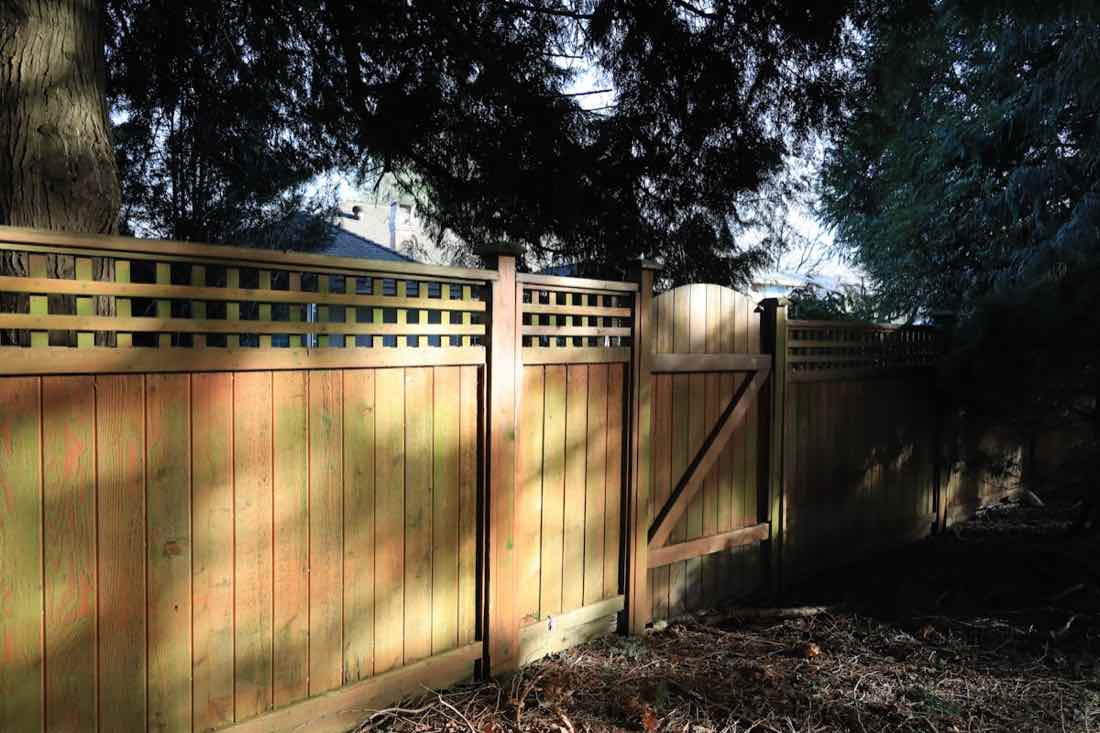
What decides a fencing job in Peachtree City
These are the rules most quotes get wrong. Every one is on the city's own published guidance.
- A building permit is required for construction or alteration of any fence four feet in height or taller. Fences under four feet need no building permit.
Anything above four feet needs an application with the fence material and height, a site plan on an official plat or survey, and a photo of the proposed fence.
- No fence shall be installed within four feet of the edge of a paved cart path.
On a lot that backs onto a path, four feet of the yard is unusable for fencing, which changes where the line can run and how much fence is needed.
- Maximum fence height outside the required setback is eight feet. Residential side and rear setback fences are capped at six feet, and decorative features may reach seven feet. Tennis court fences may be ten feet.
An eight foot privacy fence is only legal outside the setback. Along the sides and rear of most lots the real limit is six feet.
What do you need done?
- Wood privacy fence installation
Six feet is the cap in the side and rear setback, so the eight foot maximum only applies outside it.
- Aluminium fence installation
The ordinance requires exposed metal to be vinyl-coated or painted dark brown, dark green or black.
- Vinyl fence installation
Fifty inches of rain a year and wet clay are hard on untreated timber, and vinyl does not rot in ground contact.
- Chain link fence installation
Galvanised chain link is effectively banned; the ordinance requires a dark brown, dark green or black coating.
- Fence repair and post replacement
Clay movement is the usual cause of a leaning line, not impact damage or rot in the panels.
Do I need a permit?
At four feet in height and above, yes. Under four feet, no.
That single threshold decides more than it sounds like it should. A three foot picket around a front garden is a weekend job. A six foot privacy run is a paperwork job, and so is the four foot ornamental fence that sits exactly on the line.
Planning and Development wants an application describing the fence material and its height, a site plan drawn on an official plat or survey showing where the fence will run, and a photograph of the fence you intend to build. The plat is the item that holds people up, so find it before you call anyone. It is usually in the closing package from when you bought the house.
The city does not publish the fence permit fee on its fences page. Anyone quoting you a figure from a website is guessing, and one call to Planning and Development settles it.
How close to a golf cart path can a fence go?
Four feet from the edge of the pavement. Not four feet from your property line.
Peachtree City has roughly 100 miles of paved path, much of it crossing residential land on an easement that passes from one owner to the next and is shared with the neighbours either side. The land under the path is yours. The right to travel over it is not.
That distinction is why the setback is measured from the path rather than the boundary, and it is the single most common thing people get wrong when planning a fence here. On a lot that backs onto a path, the last four feet of yard cannot carry a fence at all.
It usually lowers the total, because the run gets shorter. It also adds two corners where the fence turns in and back out again. Ask for both numbers.
How tall can a fence be?
It depends where on the lot it stands, and there is no single answer.
Inside the required residential side and rear setback the cap is six feet. Decorative features on top may reach seven. Outside the setback it rises to eight feet, and a tennis court enclosure may go to ten.
The eight foot maximum gets quoted a lot. It is real, but it describes a part of the lot most homeowners are not fencing, so along a typical side or rear boundary six feet is the working limit.
Near a street the number drops again. No fence taller than four feet may stand within 40 feet of the right of way of an arterial or collector street, and the distance is 35 feet where a lot adjoins a greenbelt along a collector. Corner lots feel this hardest, and a property with two street frontages can find most of its perimeter inside one of those bands.
The rules on materials
Exposed metal must be vinyl coated or painted a standard dark brown, dark green or black. Plain galvanised does not qualify.
Wire fencing, chain link included, may not be installed between the house and an adjoining street right of way. Between those two rules, the silver chain link front yard common elsewhere in Georgia is not something you will see here.
There is a third rule that costs nothing and prevents an argument. Where a fence has structural supports on one side only, that side must face the interior of your property. The finished face looks outward, toward the neighbour.
Red clay, and why fences lean here
Red clay, and the water in it.
Clay holds water against anything buried in it, swells when it takes water on, and shrinks when it dries. A post buried in that gets squeezed and released through every wet and dry cycle, and each one opens the smallest gap between post and soil. After a few winters that gap is a lean you can see from the kitchen window.
Peachtree City takes about 50 inches of rain a year against a national average nearer 38, so there is more water moving through the ground here than in most places the national how-to articles were written for.
The fences that stay straight are the ones set 30 to 36 inches deep with six to eight inches of gravel under each post, so water drains away instead of standing against the timber. The gravel is the step that gets skipped, and skipping it is the most common reason a fence is out of true by its third spring.
If you take one question to a contractor, make it that one. What depth are the posts going to, and is there a gravel base underneath?
The best season to build
Autumn. September through November brings moderate temperatures and lower rainfall, which puts the clay at a moisture content that can actually be worked.
Spring is fine. What is not fine is setting posts into saturated clay right after heavy rain, and July is the wettest month of the year here. Clay worked wet compacts into something nearer pottery than soil, and it does not drain afterwards.
There is always a temptation to book the job the week a storm has knocked something down. Waiting a week produces a better fence.
Which material should I choose?
It depends on what the boundary is for.
Wood is the default for privacy and the cheapest way to get six feet of it. Vinyl costs more, does not rot in ground that stays damp, and reads the same from both sides, which quietly settles the finished-side question on a shared boundary. Aluminium encloses without blocking a view, which is why it dominates the lots backing onto fairways and Lake Peachtree. Chain link is the least expensive way to enclose a large area, provided it is coated in one of the three permitted colours.
Mixing materials by boundary is normal on the larger lots. Ornamental at the front, privacy where it is needed, coated wire at the back.
Licensing in Georgia, and the better question
Georgia issues no fence-specific contractor licence. Fence installation is treated as specialty trade work, and state law lets a specialty contractor perform that work for a homeowner without holding a residential or general contractor licence.
You will see a $2,500 threshold quoted all over the internet in connection with Georgia contractor licensing. It is worth being careful with that number, because it does not appear in the section of the code that sets out these exemptions. What is certain is the local rule: a Peachtree City building permit is required for a fence four feet or taller regardless of who builds it, and regardless of what licence anyone holds.
So licence status is not the useful question to ask a fence contractor here. Two better ones are whether they carry liability insurance, and whether the permit application is part of the job or something you are expected to file yourself. Both have a real answer, and neither depends on a licence that the state does not issue.
Easements, and why the plat matters
Then it is worth knowing before the posts go in rather than afterwards.
A fence built inside a utility or drainage easement can be damaged or removed whenever a crew needs to reach whatever is buried under it, and putting the fence back is the owner’s expense rather than the utility’s. The fence is not illegal. It is simply at risk, permanently, and no amount of care during installation changes that.
Easements are marked on the same plat the permit application asks for, which is one more reason to find that document early. On many lots a drainage easement runs along the same rear strip as a cart path, so the two questions get answered together.
If a particular section of an old fence has failed repeatedly in the same place, it is worth checking whether something gets dug up there periodically. That pattern is usually an easement rather than bad luck.
Gates are a separate decision
Separately from the run, and a wide gate is a different piece of work from the same width of fence.
A gate hangs its whole weight from one post and puts a load on it every time somebody swings it. That post has to be heavier than the line posts, set deeper, and braced. Hinges and latches are separate items on top, and a double gate adds a drop rod as well.
Decide how many gates you want, and how wide, before anything is set. A single walk gate is straightforward. A double gate wide enough to take a mower or a golf cart needs heavier posts either side, and on a lot backing onto a path that second gate is very often the one people actually wanted. Adding it afterwards means new posts rather than new hardware, so it is far easier to decide now.
From the first visit to the finished fence
The first two steps decide the timeline. The rest follows on from them.
A contractor comes out and walks the boundary with your plat — the survey drawing of your lot, usually in the closing package from when you bought the house. That visit settles the measured run, where any easement or cart path setback falls, and what has to come out first. A price given without that visit is a guess.
Then the permit, if the fence is four feet or taller. The application needs the material and the height, the site plan on your plat or survey, and a photograph of the fence you have chosen. This is the step with a queue attached, and it is worth starting before materials are ordered rather than after.
Removal comes next where there is an old fence, and this is where surprises live. A post set in a large concrete collar has to be broken out rather than pulled, and nobody can see that from the street beforehand.
Then the posts. Holes at 30 to 36 inches, gravel in the bottom, posts set and left to cure before anything is hung on them. A crew that sets posts and fixes panels the same afternoon is saving a day at your expense.
Panels and gates last. By that point the job is largely decided, because everything that determines whether the fence is still straight in fifteen years happened underground on the previous step.
When the plat cannot be found
The city keeps records, and a surveyor can produce a new one, but both take time that a fence job rarely has budgeted.
It is worth the effort anyway. The plat is the only document that settles three separate questions at once: where your boundary actually runs, whether an easement crosses the lot, and how far the paved edge of any cart path sits from the line you were planning to build on. Without it, every one of those becomes a guess that somebody discovers on installation day.
Old fences make this sharper rather than easier. A run installed decades ago may sit a foot off the true boundary, and once a new fence goes in on the correct line the change is obvious to everyone either side. Better to find that in the paperwork than in a conversation over the hedge.
The five villages
Across all five villages, and each has its own quirk.
Braelinn carries the most golf frontage, so the cart path setback decides more runs there than anywhere else. Glenloch has Highway 54 through it, which brings the 40 foot arterial band into play on the properties nearest the road. Aberdeen is older, so most work there is replacement and the removal charge is a real line item. Kedron mixes housing types, which means more shared boundaries and more attention to which side faces out. Wilksmoor is the newest, including Planterra Ridge, so lots are more often unfenced and the job is a first installation.
What should I ask before agreeing a quote?
Ask these before you sign anything.
- What is the measured run after any setback, rather than the boundary length?
- What depth are the posts going to, and is there gravel underneath?
- Does the price include taking the old fence out and hauling it away?
- Is the permit application part of the job, or is it mine to file?
Then ask about gates, and be specific about how many and how wide. A gate added after the posts are set is not a hardware change. It is new posts, new concrete, and a second visit.
A contractor who works in Peachtree City answers all four without checking anything. One who has to look them up is not disqualified, but you now know which conversation you are having.
What is different about working here
- The multi-use golf cart path network
About 100 miles of paved cart path run through the city, much of it along the rear of residential lots on a shared easement that passes from owner to owner. Any fence on those lots must stop four feet clear of the paved edge, which is a constraint no other Georgia city imposes.
- Greenbelt buffers along collector streets
Lots backing onto a greenbelt along a collector street cannot carry a fence over four feet within 35 feet of that right-of-way, so the usable privacy fence often stops well short of the property line.
- Golf course frontage and Lake Peachtree
Many lots back onto fairways or the lake, where sloping ground and open sight lines push owners toward four foot aluminium rather than six foot privacy panels, and where the eight foot maximum is never the binding constraint.
Where we work
Get a quote
Call (770) 285-0629, or send this and we will call you back.