Fence installation in Wilksmoor
Wilksmoor is the newest village in Peachtree City and includes the Planterra Ridge area, so lots here are more often unfenced. The work is usually a first installation with a fresh permit rather than a replacement, which changes both the paperwork and the planning.
The newest village, including the Planterra Ridge area, so lots are more often unfenced and the work is a first installation with a fresh permit rather than a replacement.
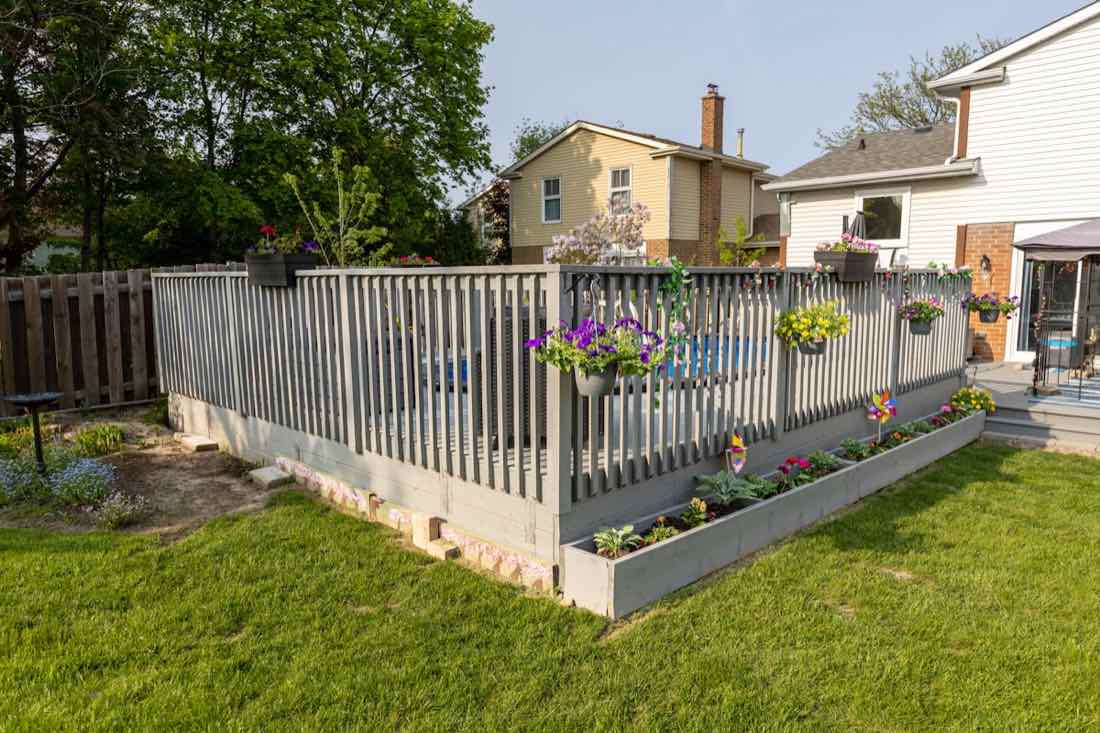
Mostly first-time work
Wilksmoor is the newest of the five villages, taking in the Planterra Ridge area, and a good share of its lots have never carried a fence.
That makes the job simpler in one way and harder in another. Nothing has to come out. So the removal charge that dominates work in the older villages does not apply. But there is no existing line to follow either, which means every decision is yours to make from scratch.
What a first installation saves, and what it does not
It saves the removal. Replacement work carries a charge per linear foot for taking the old fence out and hauling it away, and across a full perimeter that is a real number.
Against that, a new lot often needs more fence rather than less. Builders rarely fence the whole boundary. So what you are pricing is the entire perimeter instead of the one side that failed.
Where the fence should actually go
Get the plat out first. On a newer lot the survey is recent and accurate, which is an advantage the older villages do not have.
It shows the boundary, any utility or drainage easement, and whether a cart path runs behind you. A fence built inside an easement can be pulled out whenever a crew needs to reach the pipe or cable buried under it, and putting the fence back afterwards is your expense rather than the utility’s. Better to know that before choosing where the line runs. Five years later is expensive.
If a paved path does cross the rear, no fence may be installed within four feet of its edge, measured from the pavement rather than from your boundary.
New ground, same clay
This catches people out on a new build.
The soil under a recent development is the same red clay. It holds water, swells and shrinks with it, and works a shallow post loose over a few wet winters whatever the age of the house above it. Posts want 30 to 36 inches of depth and six to eight inches of gravel underneath.
Disturbed ground from construction can be looser than undisturbed clay nearby. That makes depth more important, not less. Ask what the contractor is setting to.
Do I need a permit for a first fence?
At four feet and taller, yes. The threshold is about height, and nothing about a bare lot exempts it.
The application wants the material and the height, a site plan on an official plat or survey, and a photograph of the fence you intend to build. On an unfenced perimeter it is worth deciding the gates at the same time, because a gate added after the posts are set means new posts rather than new hardware.